
Tracks of Glory!
I was recently searching through the archive folders on my laptop and I came across some interesting things that I had long forgot about. These took such forms as bicycle sketches, notes on my thoughts, rim sketches, etc. In particular, I came a cross 4 sketches that really had me thinking back a few years.
The above sketch is my very 1st design in over 23 years and I was still trying to figure out what path I wanted to take as far as designs go. In the above design, my thoughts were creating a bicycle that had all of the elements of ‘Funk’ yet characteristics of old school bicycle design. This particular design was set to be;
- Pearl in color
- A 7 inch long- 2 dimensional-
blinged out logo
- Huge diamond shaped mags
- Old School cruiser handle bars
- A HARD plastic frame
- Stretch. Limousine in length
As I look back at this design from ‘Back in the day’, I cracked a smile because this is the original Marshall Taylor Design that assisted in launching the vision.
My designs now look nothing like this and as I told you when this blog 1st launched, I had to teach myself to sketch because I couldn't find a designer that could put my vision of design down on paper or IF I told them something that didn't make sense to them (because of preconceived notions of what a bicycle should look like) freaked out and started to let me know what I was saying didn't make sense to them!
I
am telling yall this, I promise when you see my designs, you will say to yourself "This guy is delusional, but his designs sure are hot!"You want to know my secret? Now, you poor designers that are stuck working for those GIANTS in the industry, although you may
understand what I am about to tell you, it is to bad you are to scared to exercise these simple principles...
1) I never start my design process ASSUMING I know what a bicycle should look like.
2) My motto "Genius is the absence of reality".
If you think you know what it is supposed to look like before you begin, you are already STUCK in mediocrity people. Let me expand a bit on on absence of reality. There are some things that you just
have to be gifted enough to do in order to achieve greatness. Those who tell you "Work hard at it and you will become great at it" are lying to you. Case in point, "
Lebron James". Do any of you think that
Lebron James works any harder on his game than the next NBA or College Player? Kobe Bryant? What about Wayne
Gretzky? The answer to this is
ABSOLUTELY NOT!
I am not saying that they do not work hard, only that working hard won't necessarily make you great absent the gifting you need to succeed!
I want to encourage all of you to look back into your own ‘Archives’ whatever form it is in (computer, scrapbooks, photo albums, memories) and remember when you believed anything was possible. I promise you that there is something there that will bring back a powerful memory…maybe not always good, but all of us had to endure something tough to get where we are. For me, it was simply struggling through to get this sketch completed. Oh
yeh, I am posting this sketch realizing that it will make it ‘Public Domain’. The truth is, compared to what I am working on now, if you choose to use it, it will be comparable to those ugly cruisers that everyone is riding on now. Yes…yes…you know who you are! Enjoy
 My, oh my... I recently received some comments about a few posts that I wrote over a year ago. The title of the post is ‘Slammin Cadillac Doors’. The comment said that they didn’t understand why I was so outraged by the way the manufacturer of the Cadillac Brand of bicycles was disrespecting the Cadillac brand. This particular manufacturer owns the license to produce these bicycles and if I remember right, this manufacturer’s core discipline isn’t even bicycles, BUT TOYS! Now, I am not saying that a toy manufacturer shouldn’t produce bicycles because truth be told, the Cadillac Bicycles aren’t any better or worse than the rest of the Cruisers I have seen out there. I will not rehash that post because I said what I said and I do believe when anyone repeats themselves for the sake of proving their argument. What they are really saying is they do not respect other’s right to disagree with them. Whether you repeat something 2 times or 10 times, a person has the right to disagree with your point of view. You can’t force anyone to accept your point of view, just press your case and leave it alone!

The title of this post, “I feel really bad for you… I really do” specifically addresses one of my readers who wrote me and said “I don’t see what the issue is, it is just a bike!” Writer, I do respect your right to believe that I bicycle is just a bicycle. But one thing I know about you is that you have definitely forgotten what a bicycle meant to you as a child. Bicycles are something deeply personal to children who enjoy riding them and many adults who have never lost their love for bicycling! Close your eyes and remember the days you spent with your friends from the old neighborhood or school riding around, racing, getting into trouble, polishing your bicycle, getting mad when someone knocked it over, or the devastation you felt IF your bicycle was stolen. This may not be as true today because I do believe bicycles
aren’t as important to youngsters today as they seem to have become more of an indoor crowd. This is a direct result of the advent and popularity of Home Video Gaming Systems, Home Computers, Cell Phones (
texting), etc. While bicycle riding
isn’t near as important to me as it once was, what is important to me is that those who still enjoy riding are provided with the choice between what is out there now, or something their speaks more to their lifestyles.

My particular consumer happens to be from the inner-city. But there are other crowds like the Fixed Gear crowd, beach cruiser crowd, Road Bike crowd,
BMX-Dirt Bike-Skater crowd and many others. I will not ask you to retract or take back your statement, but I will ask you to just take a few minutes, get somewhere where you are able to be alone, close your eyes and remember the old days in the place where you were a child-teen. You must have had friends, no? IF any of that time was spent riding bicycles together, laughing and clowning, understand that to many of us although no longer children, hold onto those memories and thereby (unlike you) have never forgotten what it was once like to be free, without a care in the world, and guess what? Our bicycles had a lot to do with that…Remember….just try and remember.
 I posted ,many months back about a wood framed bicycle. That was then people...I will not tell you that I am fan of Road Bikes and I certainly could never bring myself to buy one because let's face it...that just 'Ain't my type of hype BABY!' However, there is a company called Renovo Bikes (http://www.renovobikes.com/) that caught my attention with their current line up of Road Bikes.
 They use not just wood on their frames yall....they use LUXURY WOODS! In 2003 as some of you know, I helped launch a Jewelry Company called 'Banneker', named after Benjamin Banneker the 1st African-American Scientist and Inventor. What the CEO envisioned doing was laying down Luxury Woods in the dials of wrist watches, rings and jewelry. People laughed at him and even people that have launched and manage large jewelry companies laughed and said it couldn't be done. (I challenge any of you to find ANY wrist watch with any kind of wood in the face between the early 1970s and 2004). It got done and now everyone is doing it!
 Renovo, has done this thing in bicycle design and their designs are nice (cluttered but nice). I guess they have to be cluttered because the folks who ride these machines need all of those gadgets....I guess. Road Bike Companies other than Renovo........know this.....As Felt Racing before them, Renovo receives my 2nd 'BOW DOWN' Award......which, for other Road Bike manufacturers means......BOW DOWN WHEN RENOVO COMES TO YOUR TOWN!
Story courtesy of http://www.statnekov.com/
Writer: Daniel K. Statnekov
In the beginning, motorcycle racing was a competition between the men who built the first spindly, motor-driven bicycles. As they turned their inventions into a business, and then into an industry, the manufacturers' continued their "race" for technical superiority and market share. Competition was the proving ground for innovation. Star riders emerged along with an enthusiastic riding public. This is the story of the innovators and the riders, of the engineers and the race fans; above all, this is the story of the men who gave us the foundation for what we ride today.

In 1876, the high-wheel bicycle was brought to America and exhibited at the Centennial Exposition in Philadelphia. A few of the British-made high-wheelers were imported, and within a short time people were riding them on the streets of Boston. At first, only the affluent could afford the expensive mechanical device, and they were considered a novelty rather than a practical means of transportation. Even when riders were proficient, the often muddy and deeply rutted dirt roads of the time made it a difficult challenge just to stay on board the precarious contrivance.
In the 1880's, however, bicycles with equal-sized wheels (called "safety" bicycles) were introduced, and quality machines became more affordable. The "safety" bicycle was not only safer, but easier to ride, and both men and women were drawn to the new invention. For the first time, large numbers of young people had the means to travel beyond their own neighborhoods. By the 1890's, the modern two-wheeler had had a profound effect on American society.
As the 20th century approached, the internal combustion engine also came to America from abroad. It didn't take long before mechanically adept young men became impassioned with the idea that the European invention might be used to power wheeled vehicles. Attaching a motor to a bicycle was a natural progression for many of the bicycle builders, and within a short time a variety of motorized two-wheelers were competing for brand-name recognition.
One of the first to enter the business was a Waltham, Massachusetts company which produced a popular brand of bicycle called the "Orient." Charles H. Metz, president and inventive genius of the Waltham enterprise, began his experiments in 1898, concocting a motorized tandem for the purpose of pacing his team of bicycle racers. Encouraged to increase their speed by the motorized "training machine," the Orient team was successful, and company sales increased accordingly.

The industrialist?s success with the tandem inspired him to assemble a self-propelled vehicle that could be sold to the public. Beginning with tricycles and quadracycles, Metz eventually constructed a heavy-duty bicycle powered by a De Dion-Bouton engine manufactured in France. The motor-driven Orient was unwieldy, but by early 1900 several prototypes had been built and tested. On July 31, 1900, Metz showcased his invention at the Charles River Race Park in Boston.
This public debut of a motor-driven Orient became the first officially recorded motorcycle speed contest in the United States. Albert Champion (a famous rider from France who had been brought to the United States by Metz to promote his line of bicycles) rode 5 miles in a little more than 7 minutes. Shortly thereafter, the motorized Orient was put into production, and in less than a year men were riding them in major cities across the country.
In May of 1901, the first organized motorcycle race in the west took place on a 1-mile horse racing track in Los Angeles. Ralph Hamlin and his Orient bested three other riders to win the 10-mile contest in 18 and 1/2 minutes. By 1902, officially sanctioned endurance competitions were held, and in May of that same year, the first road race in the United States took place between Irvington and Milburn, New Jersey (a distance of ten miles). Again, an Orient was the winner, achieving an average speed of 31 mph.
 Meanwhile the Waltham company decided to concentrate their efforts on producing a "horseless carriage," and in the Spring of 1902 Charles Metz left the firm to design and manufacture his own motorcycle. Metz?s friend and employee, Albert Champion, went on to develop an improved spark plug and founded the spark plug company that still bears his name.
The large bicycle manufacturers were not alone in the race to build and market a motor-powered two-wheeler. From a myriad of little workshops that dotted the American landscape other motorized bicycles emerged. The ingenious proprietor of one such shop in upstate New York was Glenn H. Curtiss. Curtiss had been educated in the public schools of his home town, and was notably modest, but from the very beginning his machines were exceptional.
In September of 1902, the 24 year-old Curtiss entered the record books for the first time when one of his machines made the fastest time at a Labor Day road race in New York. The following year, the engine builder (who was also a rider) won the first American hillclimb. Soon afterward, Curtiss startled observers in Providence, Rhode Island when he set a record for single cylinder machines by making a 1-mile run at 63.8 mph.
In 1904, Curtiss took one of his machines to Ormond Beach, Florida where he set a record for 10 miles on the hard-packed sand, and achieved a speed of 67.3 mph. The following year the innovative designer set yet another record by riding a twin cylinder Curtiss around the 1-mile dirt track at Syracuse in exactly 61 seconds.
The engineer's thirst for speed was finally quenched in January of 1907 when he piloted a motorcycle powered by an experimental V-8 motor over a 1-mile beach course in 26 and 2/5th seconds, achieving the astounding speed of 136.3 mph! Before Curtiss was able to make an "officially" timed corroborating run, however, his machine was seriously damaged when a universal joint broke while he was traveling at 90 mph. Lucky to escape injury from the flailing drive shaft, the daring, 28 year-old inventor was forced to call it a day.
Nevertheless, the February, 1907 issue of Scientific American published an account of the New York motor builder's exploits, and Curtiss was widely acclaimed for his extraordinary performance. Although Glenn H. Curtiss would later achieve great fame and fortune (as a pioneer aircraft designer), those 26 and 2/5th seconds through which he "galloped" a mile would establish his fame forever.

Below are a few questions that I feel needed some answering. (Submitted by some of my readers)
Question:You seem to keep changing your mind on what your favorite bike iz, so wut iz it?
Answer: If you have read my posts in chronological order, you will see that in the last 25 years, I have only seen 2 designs that I have called my favorites of all time but several others that I think are hot. To rehash, the Pee-Wee Herman was my all-time favorite design from 1985 to 2008 from 2008 until current...it is the 'Nuvinci' by Ellsworth.
Question: Do you design the whole bicycle or just use other part sources to make what you like?
Answer: Hmmmm? At this stage I think it is a lot of design on my part, some part sourcing but ALWAYS about my vision of the 'Nexus'. The meeting point of fashion, lifestyle, and bicycle design. However, I have been working with a fabricator who kind of got on my case a little just recently. He has seen some of my designs and like I said, referred to me as 'Eccentric', however, what I didn't know is that I showed him nothing he isn't capable of doing! I said to him "I won't short you again concerning your fabrication capabilities." To which he replied "Brian, don't short yourself!" Short story even shorter, I design the frames, tires (you'll love them), logos, themes, but leave the technical stuff (cranks, welds, etc) to the Fabricator of Funk.
Question: I found your blog through research of The Major on wikipedia.com, how did you get a link on his page?
Answer: Know this, wikipedia doesn't really allow people to promote their business on any given page and are very strict about who can link to any page they have. My link is 1 of only 3 that are on Taylor's wiki page because this blog is about, well, Taylor! This was a great (and free) promotional tool for my blog and I thank wiki for allowing me this luxury.
Question: I see other companies that on your favorite links that also are into bikes...the owners of 2 of them are african american. Are there any partnerships between you and the 2 of them?
Answer: Not yet. I have been in email contact with BIKEDUBZ Owner Mr. Culiver and DA Champ's right hand man (Champ is the Scraper Bike Founder) and we all agree that there are opportunities for partnerships, but all of us are really just starting out and trying to find our own footing and make things work in our own respective areas. But if you notice, all 3 of us know 1 thing and that is urban bicycle lovers like to 'Floss' and look good on their bicycles. It isn't about 'Titanium' this or that or 'The latest craze' (fixed gear,etc) but about 'Looking good' while you ride and being seen by everybody. BIKEDUBZ focuses on rims, Scraper focuses on individualizing each bicycle through rims attachments and accessories (and they are GREAT promoters) while I focus on Urban Bicycle design as a whole. We will hook up though as all three recognize the synergies
Question: If you make bikes, how can other company's bikes be your favorite?
Answer: For 2 reasons: 1- I haven't actually produced a bicycle yet. I am in the process of original fabrication right now and one thing a bicycle has to be to be my favorites(s) is be real! Produced! Functional! 2- I, like others am sure and believe that my designs are the hottest on the planet! Now while I may believe that, the fact is that many won't and that makes me bias and delusional. I do not mind being called delusional because when you see my designs come to life, you will think so to, but one thing I do not want to be called is bias.
Question: Who was Mr. S in the Nuvinci posting.I think you made him up!
Answer: So what. I don't really care what you think. I said what I said and that is that.
 Article courtesy of wikipedia.com
Isaac Burns Murphy (April 16, 1861 - February 12, 1896) was an African-American Hall of Fame jockey. The official Kentucky Derby website and the National Museum of Racing and Hall of Fame say that "Isaac Murphy is considered one of the greatest race riders in American history."
Between 1877 and 1876, Isaac Murphy competed in eleven Kentucky Derbys, becoming the first jockey to win three Derbys: "Buchanan" in 1884, "Riley" in 1890, and "Kingman" in 1891. "Kingman" was owned and trained by Dudley Allen and is the only horse owned by an African-American to win the Derby.
As well, he is the only jockey to have won the Kentucky Derby, the Kentucky Oaks, and the Clark Handicap all in the same year (1884). Considered one of the great jockeys in American history, Murphy was dubbed the "Colored Archer," a reference to Fred Archer, a prominent English jockey at the time.
Murphy won 628 of his 1,412 starts, a 44% victory rate that has never been equalled and a record about which Hall of Fame jockey Eddie Arcaro said: "There is no chance that his record of winning will ever be surpassed. [1] On its creation, Isaac Burns Murphy was the fhe first jockey to be inducted in the National Museum of Racing and Hall of Fame.
Since 1995 the National Turf Writers Association has given the Isaac Murphy Award to the jockey with the highest winning percentage for a given year in North American racing, from a minimum of 500 mounts.
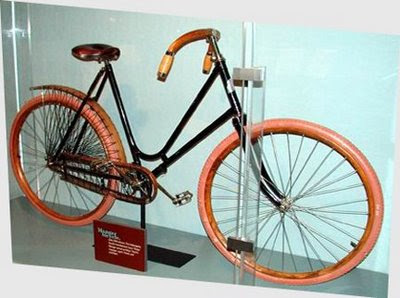 I am so remiss readers...Up to this point I have pointed out the accomplishments of Marshall Taylor, Wendell Scott, Debbie Thomas and others and I failed to mention those people, coached, trainers, teammates and others who believed in them enough to stake their reputations on the line by supporting these black athletes who were ground breakers in their respective sports. The first coach I will give tribute to is Marshall Taylor's coach and mentor...one Louis 'Birdie' Munger. Munger was the Lance Armstrong of his day in that he rode and raced the old English 'High Wheel Bicycles' long distances and was one of the few fellows to complete a cross country ride on a bicycle.
This feet was so extraordinary because in the 1880s, the nations road system (
excluding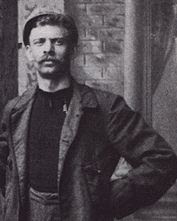
some of the East Coast) was...well, WAGON TRAILS! An interesting little fact about Birdie
Munger is that he was born in the same small town-county I was...Black Hawk County, Iowa in 1864! Birdie
Munger was one of the many whites at the time who sympathized with the cause of blacks, keeping in mind
that black slaves freed only 1 year after his birth, but he was one of the few sympathizers who put his reputation on the line to do what few others would do, and that was coach a black athlete (Taylor) at a time when, legally, black weren't even supposed to be on the same fields of athletic competition as whites.
Now let me back up for a hot second. Munger didn't decide to believe in Taylor AFTER seeing his prowess on the bicycle, he believed in, mentored and cared for a 16 year old Taylor because Taylor reminded Munger of himself in many ways. Young, hungry, and willing to do whatever it took to be the best in the world. As Munger started to coach Taylor, it became evident that his faith was well placed. At 16 years of age, Taylor was only 1 second shy of the world record as clocked by Munger on a Track in Indianapolis! Munger's coaching and belief took Taylor to the top of the track racing world from at least 1898-1905. In between those years, Taylor won 3 bicycle track Championships and even had a country, France, change their race days from Sundays to mid-week because the French wanted to see this 'Le Negro Valante' as they called him.
This is translated into 'The Flying Negro'. (This was in 1903-1904 yall). Taylor made a promise to his mother before she died that he would never race on Sundays due to the fact that she was a very religious woman. Munger tried to talk Taylor out of his commitment to his moms even though the largest racing days around the world were Sundays back then. French officials offered Taylor $10,000 in the year 1900 to race on Sunday and he refused! Dollar conversion scales from 1900-2008 say that $10,000 in 1900 is worth about $111,000 TODAY! To race for several days!
Not only was Munger a great High Wheel Racer and a great coach, this guy was the hottest bicycle designer in the late 19th Century (see above design if you think I am lying)
Were there no Louis 'Birdie' Munger, you or I may have never heard of the Greatest Sprint Bicycle Racer of all time, Marshall 'Major' Taylor.


 Posts


